
Cloud 1
NAS, media server, and storage for friends.
- cpu
- Embedded Ryzen 5 7530U (6c/12t, 2.0-4.5 GHz, 15W)
- ram
- 32 GB
- disk
- 288 TB (18 × 16 TB Western Digital Red Pro)
- os
- Synology
Main cloud for the media server, S3, and backups.
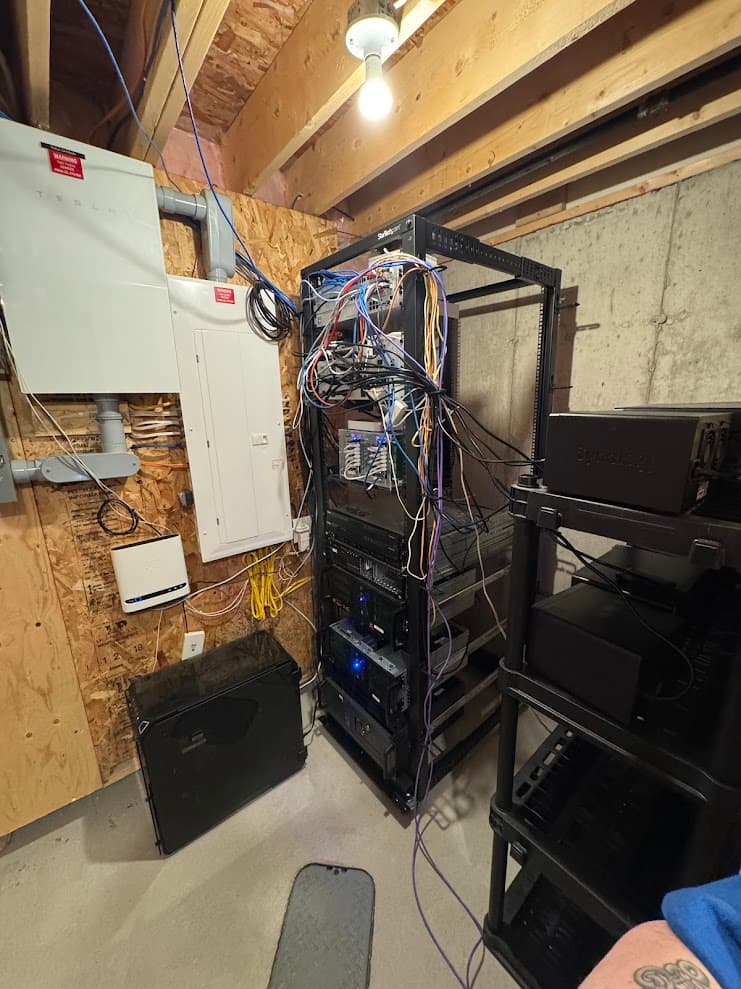
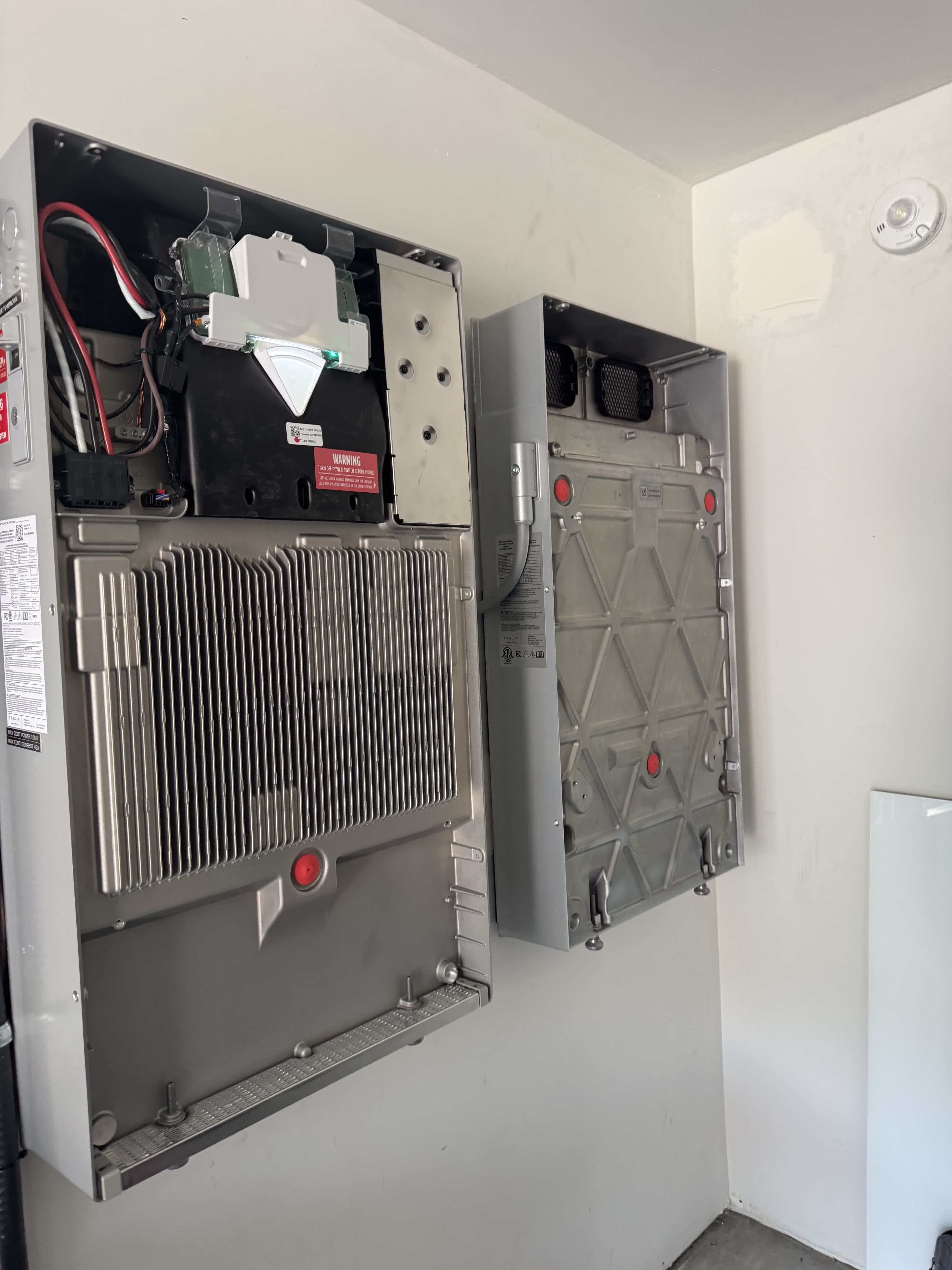
The basement is the server room. The server room is the basement. A gigabit fiber drop hits an ONT, bypasses the ISP's modem, lands on SFP, and is routed by OPNsense. Unifi U7 LR access points on each floor carry the wireless. Everything below rolls up from there. The servers also provide free heating through the winter, nearly zeroing out the gas bill. The whole setup runs on solar power, backed by two Tesla Powerwall Gen 3 units that keep everything online rain or shine.
Gigabit fiber → ONT (ISP modem bypassed) → SFP
OPNsense (custom rulebase, IDS/IPS, site-to-site VPN)
Unifi Enterprise Switches
Unifi U7 LR (one per floor)
NAS, media server, and storage for friends.
Main cloud for the media server, S3, and backups.
NAS, "graveyard" storage.
Throwaway storage for friends and backup for important data on Cloud 1. All data here is expendable — drives are "long life" units considered too old to be safe, but still running great. A pile of spares is on standby to swap in on failure.
Windows Domain Controller / HaloPSA Server
Hosts my personal testing domain controller — great for testing since I manage several at work. Also runs HaloPSA for all ticketing, with the MSSQL database on Linux. (Halo suggested a second 32 GB Windows machine just for the DB. It sits on Linux at 300 MB.)
Kubernetes / Docker cluster for small services.
An acrylic case with 10 Raspberry Pi 4s used for hands-on Kubernetes and Docker learning and small service hosting. The whole cluster runs on a single power cable with one LAN uplink to the core switch.
Reverse Proxy / StreamGate
Runs the main nginx reverse proxy in front of fully airgapped internal servers. Also hosts StreamGate, which does realtime traffic shaping using live data from OPNsense to use up to 80% of available bandwidth dynamically. Handles roughly 9 TB of traffic in and out per day.
Testing and sandbox machine
Isolated sandbox for testing development builds with small groups. Dedicated 1 Gbps port.
Testing and sandbox machine, but a second one.
Same spec as L1, kept separate to test multi-node scenarios. Dedicated 1 Gbps port.
The only remote machine. Not in the homelab. Gasp.
Located at my employer's facility, routing ASN31905 (23.150.184.0/24) to each VM. Hosts status pages and anything that needs to survive a downed home connection. True story: a tree actually took out the internet once.
Primary app hypervisor
Hosts all the app servers — large 32 GB Ubuntu VMs each running dozens of apps, split by client, company, or project. Hep.gg lives here.
Zira Discord bot / shared DB host
Picked up used just before the 2026 RAM crisis for just over $2,000 — a killer deal. Hosts Zira (which alone uses roughly 200 GB of RAM), plus Postgres, MongoDB, and MariaDB for all services, and a shared Redis instance for smaller projects. Storage is tuned for low-latency DB workloads. Incredibly fast.
...it's called Yacht because it hosts the boats.
Hosts HepBoat and HepBoat Prime. The leftover RAM also runs my internal DNS server, which doubles as the resolver for the Tailscale network.
Formerly the old appserver and reverse proxy.
Died a slow death after nearly 10 years of almost complete uptime. Originally bought used from an office where it did the same job for two years, and before that served as a roommate's main PC. The CPUs began showing high lock times and signs of impending failure, and with the power draw no longer justifiable, it was time to let it go.
Old main appserver, before being turned into a VM on Anton.
Never came back after a power cut at the old office — a common occurrence. A PSU swap didn't help. Storage was failing and one stick of RAM failed a memtest, all likely fallout from the outage. The case and surviving RAM live on inside Whopper, the domain controller.